Signs You Need New Windows in Your Michigan Home
Signs You Need New Windows in Your Michigan Home
Michigan homeowners face some of the most demanding weather conditions in the country — brutal winters, icy winds, heavy snowfall, and hot humid summers. Your windows are on the front line of that battle every single day. But how do you know when it's time to stop patching and start replacing?
At Energy Plus Home Improvements, we've inspected thousands of windows across Mt. Pleasant, Lansing, Clare, Alma, Midland, and all of Mid-Michigan. Here are the most important warning signs that tell us — and should tell you — that your windows have reached the end of their service life.
1. Drafts and Cold Air Near Closed Windows
This is the #1 sign Mid-Michigan homeowners notice first — and it's one of the most costly. If you can feel cold air coming in around a closed window, the seals have failed. Air infiltration is one of the biggest sources of heat loss in Michigan homes, and it directly drives up your heating bills every month from October through April.
Run your hand along the edges of your closed windows on a cold day. Feel any cold air? That's a red flag. You can also hold a lit candle or incense stick near the frame — if the flame or smoke flickers, air is getting through.
What it means: Failed weatherstripping, warped frames, or deteriorated seals. In older windows, this is often not worth repairing — replacement is more cost-effective.
2. Foggy or Cloudy Glass Between Panes
If you have double or triple-pane windows and you're seeing foggy, hazy, or milky condensation between the panes of glass — not on the surface — that's a dead giveaway that the seal between the panes has failed.
Double and triple-pane windows are filled with insulating gas (usually argon or krypton) between the layers of glass. When the seal breaks, that gas escapes and gets replaced with regular air containing moisture. The result is that foggy, cloudy appearance — and more importantly, a dramatic loss of insulating performance.
What it means: The insulated glass unit (IGU) has failed. The window is no longer providing the insulation it was designed to deliver. In most cases, the entire window (or at minimum the glass unit) needs to be replaced.
3. Skyrocketing Energy Bills
If your heating and cooling bills have been climbing year after year and you haven't changed your usage habits, your windows may be the culprit. The U.S. Department of Energy estimates that heat gain and loss through windows accounts for 25–30% of residential heating and cooling energy use.
Old, single-pane windows or failed double-pane windows offer very little insulation value. In a Michigan winter, that translates directly into your furnace running longer and harder — and your energy bills going up.
What it means: If your windows are more than 15–20 years old and your energy bills are high, replacing them with ENERGY STAR certified windows could reduce your heating and cooling costs by 10–25%.
4. Difficulty Opening, Closing, or Locking
Windows that stick, won't stay open, won't latch properly, or are difficult to operate aren't just annoying — they're a safety and security concern. Windows that don't lock properly are an obvious security vulnerability. Windows that won't open easily are a fire escape hazard.
Operational problems in windows are usually caused by:
- Warped or swollen frames (common with wood windows in Michigan's humidity swings)
- Broken or worn hardware (cranks, hinges, balances)
- Foundation settlement that has shifted the window opening
- Paint or buildup sealing the window shut
What it means: Minor hardware issues may be repairable. Warped or swollen frames — especially in wood windows — often indicate it's time for replacement with low-maintenance vinyl or fiberglass frames.
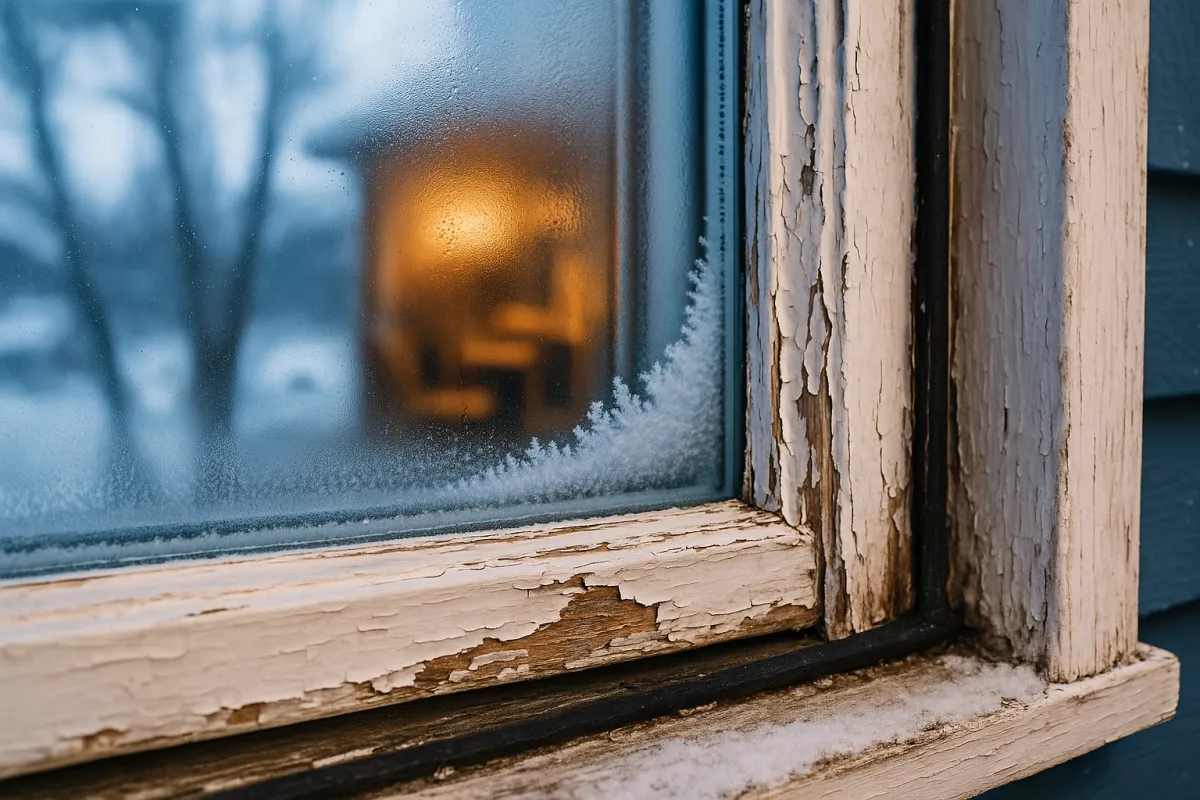
5. Visible Damage, Rot, or Deterioration
Take a close look at your window frames, sills, and surrounding trim — both inside and outside. Warning signs include:
- Soft, spongy wood — a classic sign of rot, especially on wood-framed windows
- Peeling or bubbling paint — often indicates moisture intrusion
- Water stains on the sill or wall below the window — means water is getting past the window seal
- Cracks in the frame — structural integrity is compromised
- Rust on metal components — common in older aluminum-framed windows
Water intrusion around windows doesn't just waste energy — it can lead to mold growth, structural damage to your walls, and major repair costs if left unaddressed.
What it means: Visible rot or significant damage almost always means replacement is the right call. Patching deteriorated wood frames is typically a temporary fix that will need to be redone in a few years.
6. Excessive Noise from Outside
If you can clearly hear traffic, neighbors, or outdoor noise through your closed windows, your windows are not providing adequate sound insulation. Modern double and triple-pane windows with laminated glass options provide dramatically better sound attenuation than older single-pane or worn double-pane windows.
This is especially noticeable for Mid-Michigan homeowners near busy roads, highways, or in densely populated neighborhoods.
What it means: While not an energy issue, excessive noise transmission is a quality-of-life issue that new windows can solve. If you're already replacing for other reasons, consider upgrading to laminated glass for added sound reduction.
7. Condensation on the Interior Glass Surface
Don't confuse this with fogging between panes. Condensation on the interior surface of your window glass on cold days is actually a sign that your indoor humidity is high — but it can also indicate that your window glass is so poorly insulated that it's dropping to the dew point temperature.
In a well-insulated double-pane window, the interior glass surface stays warm enough that condensation doesn't form until indoor humidity is very high. If you're seeing condensation on your windows in normal humidity conditions, your window's insulating performance has likely degraded significantly.
8. Your Windows Are More Than 20 Years Old
Even if you're not seeing obvious problems, windows older than 20 years are likely underperforming compared to modern standards. Window technology has advanced dramatically — modern Low-E coatings, better gas fills, improved frame materials, and tighter installation techniques all mean that today's windows significantly outperform windows from the early 2000s or earlier.
If your windows are approaching or past the 20-year mark, it's worth having them professionally assessed. In many cases, proactively replacing aging windows before they fail saves money on emergency repairs and keeps energy bills lower in the meantime.
How Do You Know If It's Replacement vs. Repair?
Not every window problem requires full replacement. Here's a quick guide:
| Issue | Repair or Replace? |
|---|---|
| Single broken pane (single-pane window) | Repair (glass replacement) |
| Foggy glass between panes | Replace (glass unit or full window) |
| Broken lock or hardware | Repair (hardware replacement) |
| Rotted wood frame | Replace |
| Drafts from weatherstripping | Repair (re-weatherstrip) if frame is sound |
| Warped frame (won't close properly) | Replace |
| Window over 20 years old with multiple issues | Replace |
| Single hardware issue on newer window | Repair |
The general rule: if a window has multiple issues, is older than 15–20 years, or has frame rot or structural problems, replacement is almost always the better investment.
What's the Cost of Waiting?
Many Mid-Michigan homeowners put off window replacement because of upfront cost concerns. But the math often works against waiting:
- Energy waste: Failing windows can add hundreds of dollars per year to your heating and cooling bills
- Water damage: A leaking window seal can lead to wall rot, mold remediation costs, and structural repairs that dwarf the cost of window replacement
- Home value: Outdated, damaged windows hurt curb appeal and home resale value
- Comfort: Cold drafts, noise, and condensation reduce your quality of life in your own home every day
When you factor in energy savings, potential tax credits, and avoided repair costs, new windows often pay for themselves faster than homeowners expect.
Frequently Asked Questions: Window Replacement in Michigan
How do I know if my double-pane windows have failed?
The most obvious sign is foggy or cloudy condensation between the panes of glass. This means the insulating gas seal has broken and the window is no longer providing proper insulation. You may also notice the glass feels colder to the touch than it should on winter days.
Can I repair foggy double-pane windows instead of replacing them?
There are services that claim to defog windows by drilling small holes and inserting desiccant, but these are generally considered temporary fixes. Once the seal has failed, the window will never perform as well as it originally did. In most cases, replacing the insulated glass unit or the full window is the more cost-effective long-term solution.
How long should windows last in Michigan?
Quality vinyl windows typically last 20–40 years in Michigan's climate. Wood windows may last just as long with proper maintenance, but are more susceptible to rot and moisture damage. Aluminum windows are durable but less energy-efficient. Most window manufacturers offer 20–25 year warranties on their products.
Do new windows really make a difference in winter in Michigan?
Absolutely. Replacing single-pane windows or failed double-pane windows with modern ENERGY STAR certified double-pane windows can reduce heat loss through windows by 40–50%. Mid-Michigan homeowners regularly report noticeably warmer, more comfortable homes after window replacement.
What time of year is best to replace windows in Michigan?
Spring and fall are the most popular times for window replacement in Michigan — temperatures are moderate, making installation comfortable and allowing proper curing of sealants. That said, experienced contractors can install windows year-round, and winter installs are often completed successfully with proper technique.
How much does window replacement cost in Michigan?
In the Mt. Pleasant, Lansing, and Mid-Michigan area, expect to pay between $300–$700 per window installed for quality double-pane windows, or $5,000–$15,000 for a typical full-home replacement. See our full 2026 Michigan Window Cost Guide for detailed pricing.
Get a Free Window Inspection & Estimate in Mid-Michigan
Think it might be time for new windows? Don't guess — let the experts at Energy Plus Home Improvements take a look. We offer free, no-obligation window inspections and estimates for homeowners throughout Mt. Pleasant, Lansing, Clare, Alma, Midland, Saginaw, and all of Mid-Michigan.
Our team will assess the condition of your current windows, identify any issues, and give you an honest recommendation — whether that's repair, replacement, or simply monitoring for now. No pressure. No surprises. Just expert advice you can trust.
��️ Call us today or schedule your free window inspection online. Let Energy Plus help you keep the Michigan cold where it belongs — outside.